Rancho El Uno
Conserving grasslands and species through regenerative ranching and grassland restoration
Context
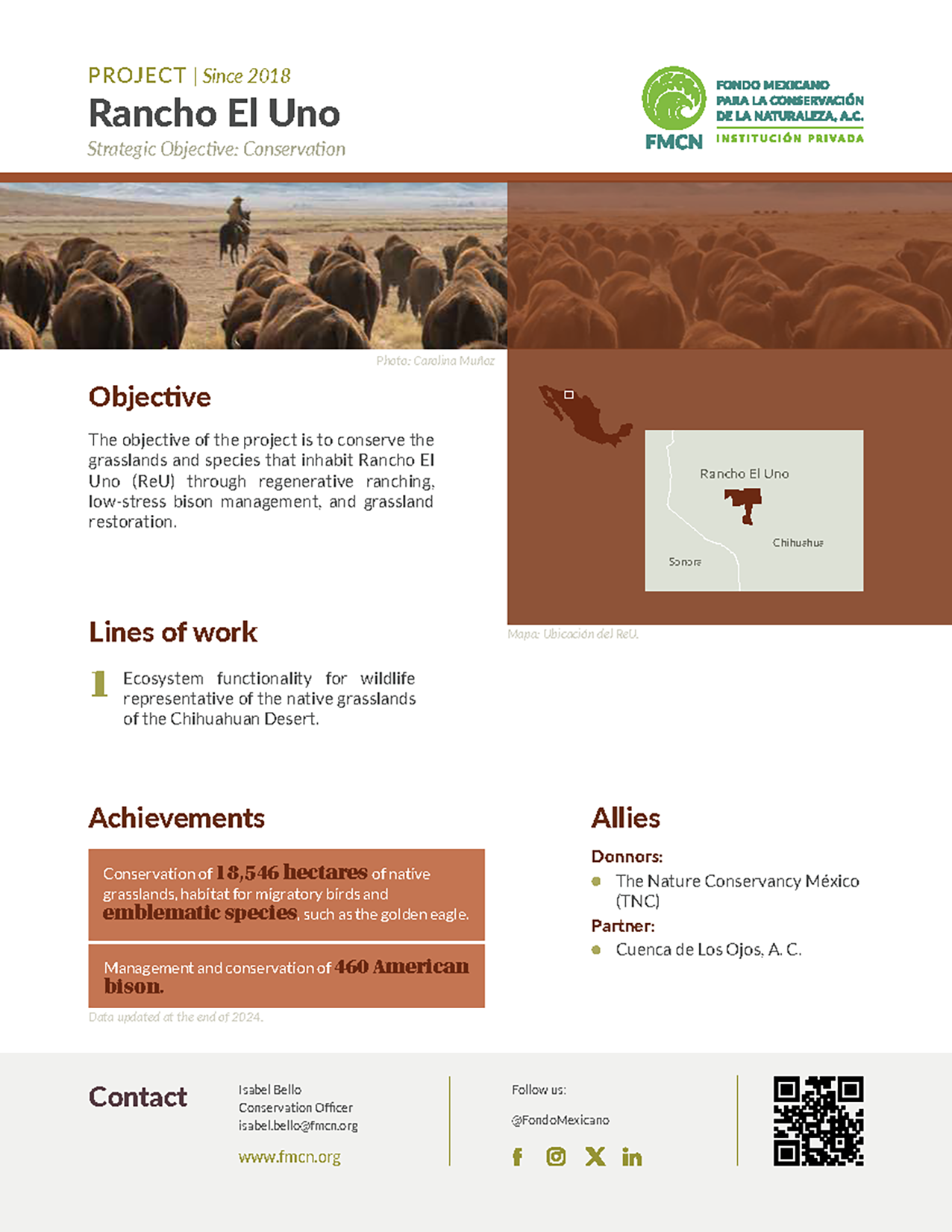
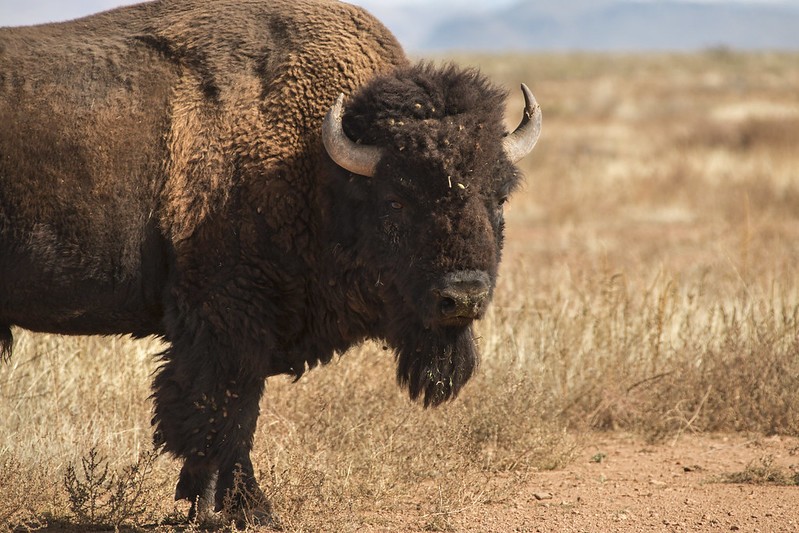
Thanks to a major multi-institutional effort, significant progress has been made in the recovery of the American bison (Bison bison) in the wild. In 2009, 23 bison were reintroduced from conservation herds in South Dakota, United States. By 2018, the year ReU was placed under the stewardship of the Mexican Fund for the Conservation of Nature (FMCN, acronym in Spanish), the herd had grown to 230 individuals. In 2019, 19 bison were translocated from ReU to the plains of Coahuila, to the El Carmen Nature Reserve, located within the Maderas del Carmen Protected Area. This effort was coordinated by the National Commission of Natural Protected Areas (Conanp, acronym in Spanish), the General Directorate of Wildlife at the Ministry of Environment and Natural Resources (Semarnat, acronym in Spanish), CEMEX, AES México, and FMCN. Currently, the population is estimated at approximately 460 bison, requiring careful technical management to ensure their health and genetic viability.
The operation and management of ReU is led by the organization Cuenca de Los Ojos, A.C. (CLO), which has over 40 years of experience in restoring and protecting grasslands in northeastern Sonora, as well as in regenerative ranch management. The collaboration between CLO and FMCN is formalized through a donation agreement that is renewed annually.
- Ecosystem functionality for wildlife representative of the native grasslands of the Chihuahuan Desert.
- Synergy with local and national stakeholders for more effective management.
- Financial sustainability for the conservation of ReU.
ReU represents one of the continent’s most important sites for migratory birds and iconic species, such as the American bison, black-tailed prairie dog and golden eagle.
Achievements
In 2024, CLO carried out preventive and corrective maintenance on roads and infrastructure, which are essential for bison management and monitoring activities. Nearly 90 calves were reported born, confirming the healthy growth of the herd. A more accurate count is expected during veterinary management efforts scheduled for early 2025.
That same year, CLO made progress in updating ReU’s Comprehensive Management Plan, which now includes a new Monitoring Master Plan. This document reflects a broader vision for the ranch as a site for environmental education, restoration, and the conservation of flora and fauna.
In coordination with the National Autonomous University of Mexico (UNAM, acronym in Spanish), 26 hectares were restored using the keyline design technique within the Báscula paddock.
Environmental education is a key pillar of the project. ReU continuously hosts students from primary and secondary levels, and CLO staff participate in ongoing training processes to strengthen their technical and field-based capacities.