Fire and Restoration Management Fund (FOMAFUR)
Capacity building of local organizations in fire management and restoration of affected areas.
Context
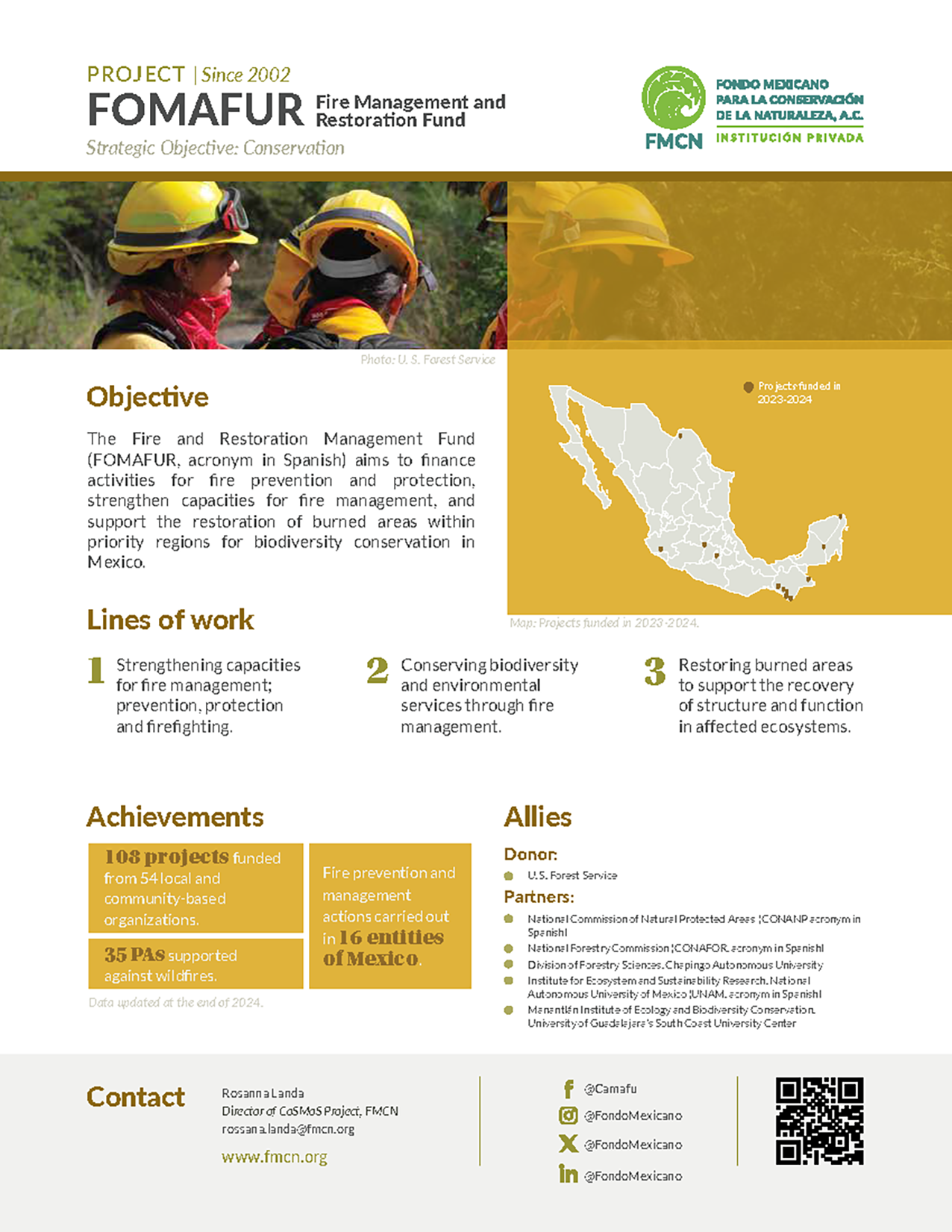
In 2002, through an endowment, FMCN created Fomafur to provide permanence to fire management activities. Through biannual calls for proposals aimed at organizations and rural and indigenous communities, Fomafur seeks to strengthen and implement current public policies on the conservation of Mexico’s biodiversity and forest ecosystems (General Law for Sustainable Forest Development and the Fire Management Program 2020-2024). Fomafur is aligned with international forest fire protection and management trends (United Nations Environment Programme – 2022; Spreading like Wildfire – The Rising Threat of Extraordinary Landscape Fires; A UNEP Rapid Response Assessment; Nairobi).
The lines of work that guide Fomafur’s actions are:
- Fire prevention and protection, and capacity building to implement strategies to reduce fire danger and negative impacts on PAs and their surrounding areas.
- Fire management to conserve and restore fire regimes and reduce negative impacts on biodiversity and its environmental services.
- Restoration of burned areas through the recovery of the structure and functions of affected ecosystems.
In 2004, FMCN created Fomafur to give permanence to fire management activities.
Achievements
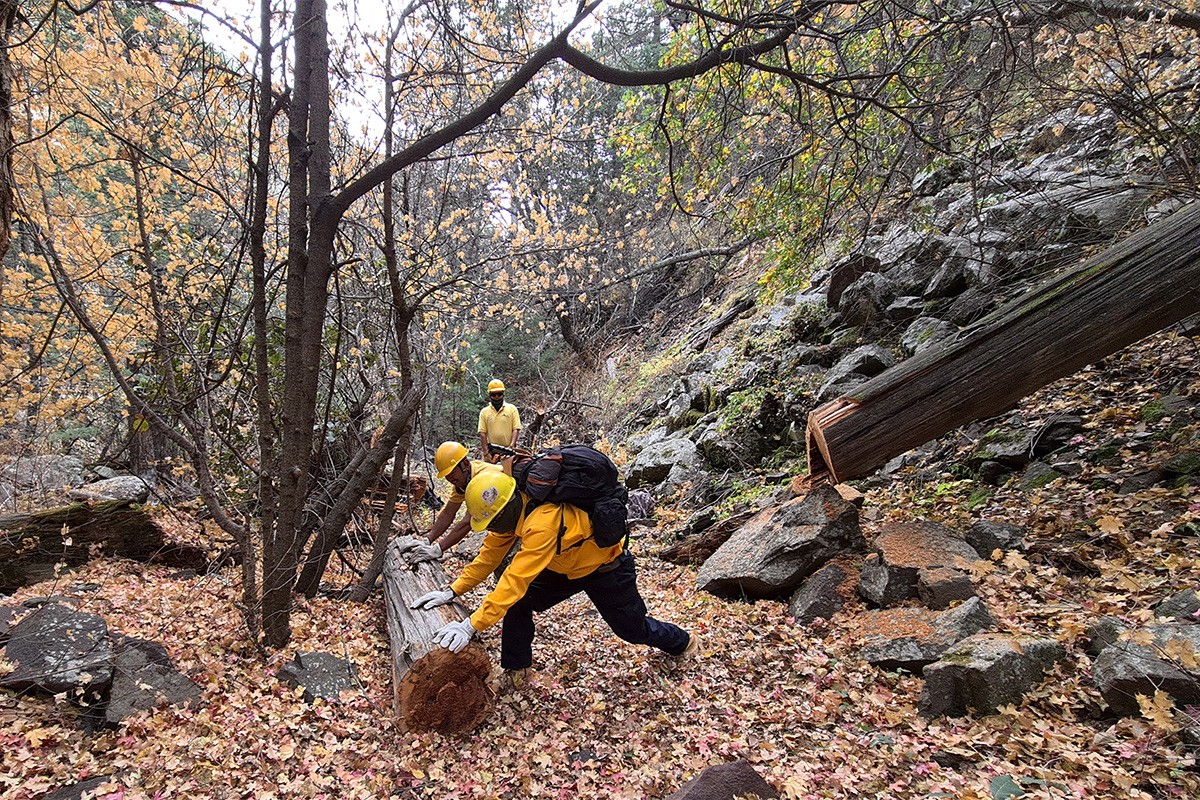
During the second half of 2024, nine subprojects were funded, implemented by local organizations in priority areas for biodiversity conservation in collaboration with the National Commission of Natural Protected Areas (Conanp, acronym in Spanish) and the National Forestry Commission (Conafor, acronym in Spanish). These subprojects formed 25 fire management brigades, promoting gender-equitable participation, and trained 164 people in wildfire prevention and control. Additionally, restoration and sustainable natural resource use activities were carried out on 942 hectares and 225 linear kilometers. As part of the awareness-raising strategy, 18 environmental education materials were developed, including banners, posters, videos, and radio announcements.
Allies
- U.S. Forest Service
- National Commission of Natural Protected Areas (Conanp, acronym in Sapanish)
- National Forestry Commission (Conafor, acronym in Spanish)
- Division of Forestry Sciences at the Autonomous University of Chapingo
- Institute of Ecosystems and Sustainability Research at the National Autonomous University of Mexico
- Manantlán Institute of Ecology and Biodiversity Conservation at the University of Guadalajara’s South Coast University Center
- Comunidad de aprendizaje.